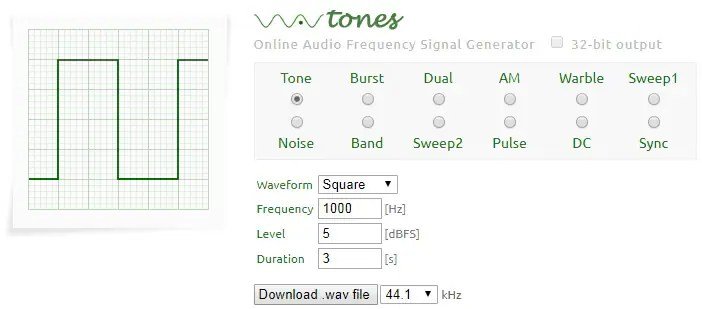
Imagine being able to fine-tune your expensive home audio system, train your ear for perfect pitch, find deep meditative states, or even design unique sound effects, all from a simple webpage. This isn't science fiction; it's the everyday reality of practical applications of online tone generators. These unassuming web tools have become invaluable assets across diverse fields, offering precision sound generation to anyone with an internet connection.
No longer just for sound engineers, an online tone generator places the power of digital signal processing (DSP) directly into your browser, democratizing access to specialized audio functions previously requiring dedicated hardware or complex software. Whether you're an audiophile, a musician, a student of acoustics, or simply seeking better sleep, understanding how to leverage these tools can unlock a world of sonic possibilities.
At a Glance: Quick Takeaways
- What they are: Web-based tools generating precise audio tones at specified frequencies.
- Core Function: Input frequency (Hz) and waveform (sine, square, etc.) to produce sound.
- Versatile Modes: Offers noise generation (white, pink, brown), binaural beats, frequency sweeps, and chord creation.
- Wide Range: Typically covers 1 Hz to 22,000 Hz, beyond human hearing.
- Key Benefits: Highly accessible, user-friendly, versatile, and often free.
- Practical Uses: Audio equipment testing, hearing checks, education, sound therapy (relaxation, focus), and creative sound design.
- Safety Tip: Always start at low volume and gradually increase to protect your hearing.
Decoding Sound: What Exactly Are Online Tone Generators?
At their heart, online tone generators are digital utilities that convert user-defined parameters into audible sound waves. Think of them as sophisticated synthesizers, but instead of complex interfaces, they typically present a straightforward set of controls: a frequency slider or input box, waveform selectors, and perhaps a few specialized modes.
The magic happens behind the scenes with digital signal processing (DSP) algorithms. When you input a desired frequency – say, 440 Hz for the musical note A4 – and select a waveform like a sine wave, the tool digitally constructs that specific sound wave. This digital representation is then converted into an analog audio signal, which your device's speakers or headphones project as sound. It’s a seamless process, making these powerful tools incredibly accessible and user-friendly, offering professional-grade functionality without the steep learning curve or cost associated with traditional audio equipment. Their web-based nature means you can access them on virtually any internet-connected device, from a laptop to a smartphone, making them incredibly versatile.
The Science Under the Hood: Frequencies, Waveforms, and Beyond
To truly harness the power of an online tone generator, it helps to understand the fundamental elements they manipulate. These aren't just random beeps; they are precise sonic constructs designed for specific effects.
The Building Blocks of Sound: Frequencies and Waveforms
- Frequency Range: Most online generators cover a vast spectrum, typically from 1 Hz (Hertz) all the way up to 22,000 Hz. This range extends beyond the average human hearing threshold, which generally spans 20 Hz to 20,000 Hz. This extended range is crucial for testing equipment or exploring the subtle nuances of sound.
- Waveforms: The shape of a sound wave dictates its timbre or quality. Online generators typically offer several key waveforms:
- Sine Wave: The purest, smoothest sound, containing only the fundamental frequency. Excellent for basic testing and therapeutic uses where unwanted harmonics are undesirable.
- Square Wave: Rich in odd harmonics, giving it a hollow, "reedy," or harsh sound often heard in retro video games or electronic music.
- Sawtooth Wave: Contains both even and odd harmonics, creating a bright, buzzy, and full sound, commonly used for brassy synth sounds.
- Triangle Wave: Sounds softer and rounder than a square wave, with fewer high-frequency harmonics, often described as flute-like.
- Custom Harmonics: Some advanced tools allow you to build custom waveforms by combining multiple sine waves at different harmonic intervals, offering incredible sound design potential.
Beyond Basic Tones: Specialized Modes
Many modern online tone generators extend their capabilities with specialized modes, each opening up new avenues for application.
- Noise Generation: More than just static, different noise types have unique properties and uses:
- White Noise: Contains equal energy at all frequencies, producing a bright, hissing sound. It's excellent for sound masking, helping to block out distracting environmental noises.
- Pink Noise: Features equal energy per octave, meaning it has more bass and sounds "deeper" than white noise, often compared to the sound of steady rain. It's frequently used for sleep aids and acoustic measurement.
- Brown/Red Noise: Emphasizes even lower frequencies, resulting in a deep, rumbling sound. Ideal for deep relaxation or creating ambient, natural soundscapes.
- Binaural Beats: This fascinating psychoacoustic phenomenon occurs when two slightly different frequencies are played into each ear via headphones. The brain perceives a "third" beat frequency, which can influence brainwave states:
- Delta (0.5-4 Hz): Associated with deep sleep and profound relaxation.
- Theta (4-8 Hz): Linked to meditation, creativity, and light sleep.
- Alpha (8-12 Hz): Promotes a relaxed, calm, and alert state, good for learning.
- Beta (12-30 Hz): Enhances focus, concentration, and problem-solving.
- Gamma (30-50 Hz): Associated with peak awareness, high-level processing, and cognitive function.
- Frequency Sweeps: Instead of a single, static tone, a sweep gradually changes frequency over time.
- Linear Sweeps: Change frequency at a constant rate (e.g., 100 Hz per second).
- Logarithmic Sweeps: Change frequency by a constant ratio, mimicking how human hearing perceives pitch intervals. These are essential for testing audio equipment across its full frequency range.
- Chord Creation: Some generators can produce multiple tones simultaneously to form chords, including Major, Minor, Diminished, Augmented, 7th chords, and Suspended chords. This feature is particularly useful for music education and composition.
- Tuning Standards: While A4 = 440 Hz is the international standard for musical tuning, some tools offer A4 = 432 Hz as an alternative, preferred by some for its perceived calming or natural qualities.
- Solfeggio Frequencies: These specific tones (174 Hz, 285 Hz, 396 Hz, 417 Hz, 528 Hz, 639 Hz, 741 Hz, 852 Hz, 963 Hz) are believed by some to have healing or spiritual benefits, often used in sound baths or meditative practices. While scientific evidence is limited, their use in therapeutic contexts is growing.
Application 1: Sharpening Your Senses – Audio Testing & Calibration
One of the most immediate and useful applications of online tone generators is in the realm of audio equipment. Whether you're an audiophile, a budding sound engineer, or just someone who wants their music to sound its best, these tools are indispensable for diagnosis and calibration.
Assessing Speaker and Headphone Performance
Before blaming your favorite track for sounding off, use a tone generator to check your audio gear. A common method involves a frequency sweep from 20 Hz to 20,000 Hz to test the full range.
- Identifying Distortions: As the sweep progresses, listen carefully for any buzzing, rattling, or crackling sounds. These can indicate a blown speaker, loose wiring, or an enclosure vibration. Low frequencies (e.g., below 80 Hz) are particularly good for revealing rattles in speaker cabinets or even objects in the room.
- Checking Frequency Response: A good speaker or headphone should reproduce all frequencies evenly. If certain parts of the sweep sound significantly louder or quieter than others, it indicates an uneven frequency response, highlighting strengths and weaknesses in your equipment. For instance, a "Speaker Test" sweep from 100 Hz to 10 kHz is a quick way to gauge mid-range clarity and overall balance.
- Stereo Separation: By generating a tone and panning it hard left then hard right, you can verify that your stereo channels are working correctly and that the sound image shifts as expected. This helps ensure your audio sounds spacious and immersive, not just a mono blob.
Calibrating Sound Systems
Professional audio setups often require precise calibration, and an online tone generator can be a surprisingly effective starting point.
- Room Acoustics: Using pink noise, you can get a basic sense of your room's acoustic profile. Pink noise, with its even energy per octave, is ideal for pairing with a simple sound level meter (even a smartphone app can work for rough estimates) to identify overly resonant frequencies or dead spots in a room. Adjusting speaker placement or adding acoustic treatment can then optimize your listening environment.
- Subwoofer Integration: Generating tones between 20 Hz and 120 Hz can help you properly set the crossover frequency and phase of your subwoofer, ensuring a seamless blend with your main speakers for deep, impactful bass without sounding boomy or disconnected.
Application 2: The Sound of Health – Therapeutic & Wellness Uses
Beyond the technical, tone generators venture into the deeply personal realm of well-being. Sound therapy, stress relief, and enhanced focus are increasingly accessible through these simple digital tools.
Cultivating Calm: Stress Relief and Relaxation
Specific sound profiles can profoundly influence our mental and physical state.
- Noise for Sleep and Focus:
- Pink Noise or Brown Noise at a consistent, low volume can create a soothing auditory blanket. Many find the steady, deeper hum of these noise types effective for masking environmental distractions, promoting deeper sleep, or enhancing concentration during work or study. They create a "sound curtain" that helps the brain filter out sudden, jarring noises.
- Solfeggio Frequencies: While their therapeutic efficacy is still widely debated in scientific circles, many individuals report positive experiences using Solfeggio frequencies for relaxation, emotional balance, and spiritual practices. For example, 528 Hz is often referred to as the "love frequency" or "miracle tone," believed by proponents to aid in cellular repair and reduce stress. Experimenting with these tones during meditation can be a personal journey of discovery.
Sharpening the Mind: Focus and Meditation Enhancement
For those seeking to delve deeper into mindfulness or boost cognitive function, binaural beats offer a unique avenue.
- Journeying Through Brainwave States: By simply wearing headphones and playing the appropriate binaural beat setting, you can gently guide your brain towards desired states:
- Need to unwind after a long day? Alpha waves (8-12 Hz) promote a relaxed, calm alertness.
- Struggling to fall asleep? Delta waves (0.5-4 Hz) are associated with deep, restorative sleep.
- Preparing for a challenging task? Beta waves (12-30 Hz) can enhance focus and concentration, while higher Gamma waves (30-50 Hz) are linked to peak cognitive function and problem-solving.
- Looking to deepen your meditation practice? Theta waves (4-8 Hz) facilitate meditative states and access to subconscious thought.
It's important to remember that headphones are crucial for binaural beats to work, as the subtle frequency difference must be delivered independently to each ear.
Addressing Tinnitus: Masking and Relief
For individuals experiencing tinnitus – the perception of ringing or buzzing in the ears – online tone generators can offer a form of temporary relief.
- Sound Masking: By generating a broadband noise (like white or pink noise) or a specific tone at a frequency close to the perceived tinnitus pitch, some individuals find that the external sound masks or distracts from the internal ringing, making it less noticeable or bothersome. While not a cure, it can be a valuable coping mechanism. Always consult with a healthcare professional for persistent tinnitus.
Application 3: Hearing What You Missed – Auditory Checks & Research
Beyond technical calibration and therapeutic uses, tone generators serve as accessible tools for understanding our own auditory capabilities and for educational purposes.
DIY Hearing Screening
Want to know your personal hearing range? A frequency sweep from 20 Hz to 20,000 Hz can give you a rough estimate.
- Determining Your Limits: Start the sweep from a low frequency and increase the volume gradually until you can just hear the tone. Note the frequency. Do the same for the high end, sweeping downwards. As we age, our ability to hear higher frequencies diminishes. This simple test, while not a medical diagnosis, can provide interesting insights into your auditory acuity. Be extremely cautious with volume, especially at high frequencies, to protect your ears.
- Identifying Gaps: If you find a significant drop-off or inability to hear certain frequencies that you believe you should, it might be a good prompt to consult an audiologist for a professional hearing test.
Auditory Research and Demonstrations
For students, educators, and curious minds, online tone generators are fantastic for demonstrating the principles of sound.
- Physics and Acoustics: Teachers can use a tone generator to easily illustrate concepts like frequency, pitch, amplitude (volume), and how different waveforms produce distinct sounds. Generating a low frequency and then a high one vividly demonstrates the difference between bass and treble.
- Psychoacoustics: Phenomena like the missing fundamental, where the brain "fills in" a fundamental frequency even when only its harmonics are present, can be explored with custom harmonic generation. Similarly, the concept of binaural beats itself is a powerful demonstration of how the brain processes auditory information.
Application 4: Education & Musical Mastery
For musicians, aspiring producers, and anyone interested in the mechanics of music, tone generators are versatile learning and tuning aids.
Nurturing a Musician's Ear
- Pitch Recognition Training: By generating individual notes at precise frequencies (e.g., A4 = 440 Hz), musicians can train their ear to recognize specific pitches and intervals. This is invaluable for developing perfect pitch or improving relative pitch skills. Try generating a single note and then trying to sing or play it back on your instrument.
- Interval and Chord Recognition: Using the chord creation mode, you can generate different chord types (Major, Minor, Diminished, Augmented) to help train your ear to identify their unique qualities and emotional impact. This is a fundamental skill for composers and improvisers.
Precision Instrument Tuning
While dedicated tuners exist, an online tone generator can serve as a reliable reference.
- Standard Tuning: The universally accepted tuning standard is A4 = 440 Hz. By generating a pure sine wave at this frequency, musicians can accurately tune instruments like guitars, violins, or even their voice. Many online tools also offer alternative tuning standards like A4 = 432 Hz, catering to preferences for different sonic qualities.
- Harmonic Tuning: For instruments like pianos or organs, which have complex overtone series, tone generators can be used to check individual notes against their theoretical frequencies, aiding in more precise tuning. This ensures that all notes within an octave are in perfect harmony.
Application 5: Unleashing Creativity – Sound Design & Art
In the hands of artists and creators, online tone generators transcend their technical utility, becoming instruments of innovation.
Sculpting Sonic Landscapes for Music and Media
- Electronic Music Production: Tone generators are fundamental tools in electronic music. Producers can generate precise sine waves to create sub-bass lines that traditional instruments struggle to achieve. Square and sawtooth waves are perfect for crafting classic synthesizer leads, punchy bass, or atmospheric pads. The ability to create custom harmonics further expands the palette for unique sound textures.
- Sound Effects Design: Imagine needing a specific, unsettling drone for a film scene or a futuristic interface sound for a video game. Tone generators allow for surgical precision. A frequency sweep combined with specific waveforms can create anything from a sci-fi laser blast to a deep, resonant rumble, adding depth and authenticity to audio production.
Integrating into Multimedia Art Installations
- Experimental Audio: Artists push boundaries by integrating tone generators directly into interactive installations. Picture a room where visitors' movements alter generated frequencies, creating a dynamic, evolving soundscape. Or an art piece that uses specific tones to evoke certain emotions or memories, exploring the psychological impact of sound.
- Ambient Soundscapes: Using various noise types (white, pink, brown) or slowly evolving frequency sweeps, artists can craft immersive ambient environments that complement visual art or performance, transforming a space purely through sound. The accessibility of online tools means artists can experiment without needing expensive equipment.
Mastering Your Tones: Best Practices for Optimal Use
Getting the most out of your online tone generator requires a few mindful considerations. These tips will help you achieve accurate results and protect your hearing.
- Start at a Low Volume, Always: This is the golden rule. High frequencies, especially, can be very piercing and potentially damaging at high volumes. Begin with your device's volume at its lowest setting and gradually increase until the sound is audible and comfortable.
- Choose the Right Frequency for the Task:
- Low Frequencies (20-200 Hz): Ideal for testing bass response, identifying rattles, or creating deep, atmospheric rumblings.
- Mid Frequencies (200-2,000 Hz): Excellent for vocal range checks, general audio balance, and identifying midrange clarity issues.
- High Frequencies (2,000-20,000 Hz): Useful for treble response testing, checking tweeter performance, and assessing high-frequency hearing.
- Select the Appropriate Waveform:
- Sine Waves: Use for pure, uncolored testing, therapeutic applications, or when you want a smooth, clean sound.
- Square/Sawtooth/Triangle Waves: Employ these when you need richer harmonics, a "buzzier" or "harsher" sound, or for electronic music design.
- Use High-Quality Output Devices: The accuracy of your results depends heavily on your speakers or headphones. Low-quality audio devices can introduce their own distortions, coloration, or frequency limitations, giving you misleading information. Invest in decent headphones or monitors for critical listening and testing.
- Be Mindful of Your Environment: For accurate testing or therapeutic use, try to minimize background noise. A quiet room allows you to hear the subtle nuances of the generated tones more clearly.
- Regular Calibration (for equipment testers): If you're using a online tone generator for serious audio equipment calibration, make sure your measurement tools (like an SPL meter) are also calibrated regularly for consistent and trustworthy results.
Common Questions & Misconceptions
Let's clear up some common queries about these versatile tools.
Are Online Tone Generators Safe to Use?
Absolutely, provided you exercise caution with volume. The primary risk comes from prolonged exposure to excessively loud sounds, particularly at high frequencies, which can cause hearing damage. Always start quietly and increase volume slowly. Online tone generators themselves don't inherently emit dangerous radiation or signals beyond audible sound waves.
Can These Tools Replace Professional Audio Equipment or Hearing Tests?
No, not entirely. While online tone generators are incredibly useful for basic checks, personal exploration, and initial diagnostics, they are not substitutes for professional-grade audio analysis equipment or clinical audiometric testing. Professional tools offer greater precision, calibration, and diagnostic capabilities. Similarly, if you suspect hearing loss, always consult a qualified audiologist.
Are Solfeggio Frequencies Scientifically Proven to Heal?
The claims regarding the healing or spiritual benefits of Solfeggio frequencies (e.g., 528 Hz for DNA repair) are largely anecdotal and are not widely supported by rigorous scientific research. While sound can certainly impact mood and relaxation, attributing specific physiological healing properties to these frequencies should be approached with a healthy dose of skepticism. However, many individuals find them personally beneficial for relaxation and meditation, so their use in these contexts is valid from a personal wellness perspective.
Which Online Tone Generator is the "Best"?
The "best" one depends entirely on your specific needs. Most offer similar core functionality (frequency, waveform selection). Look for a tool with an intuitive interface, stable performance, and the specific advanced features you require, such as binaural beats, noise types, or chord generation. Many are free and excellent, so experiment to find one that suits you.
Beyond the Beep: The Future of Online Audio Tools
The landscape of online audio tools is continuously evolving. As web browser capabilities become more sophisticated and internet speeds increase, we can anticipate even more powerful and feature-rich online tone generators. Imagine real-time integration with other web-based audio production suites, AI-driven sound design suggestions, or even interactive educational platforms that dynamically adjust tones based on user input.
For now, the accessible and versatile nature of existing online tone generators makes them indispensable tools in an increasingly sound-centric world. Whether you're troubleshooting a speaker, seeking a moment of peace, or crafting the next sonic masterpiece, these digital marvels offer a fascinating and deeply practical gateway into the power of sound.